Would you like to switch to the accessible version of this site?

Go to accessible site Close modal window

Don't need the accessible version of this site?

Hide the accessibility button Close modal window
Accessibility View Close toolbar
Normandy Animal Hospital

7626 Florissant Road

St. Louis, MO 63121 US

(314) 383-4677

Open mobile navigation
  • Home
  • New Patient Center
    • Online Forms
    • What to Expect
    • Veterinary Resources
    • Payment Options
  • About Us
    • Meet the Veterinarians
    • Dr. Jordan Rice DVM
    • Dr. Bryce M Goman
    • Meet Our Staff
      • Tricia Braucksick
      • Kayla Pullar
    • News
  • Services
    • Canine Vaccines
    • Feline Vaccines
    • Additional Services
  • Deals
  • Emergency
    • Allergic Reaction
    • Broken Bones
    • Burns
    • Choking
    • Drowning
    • Electric Shock
    • Frostbite and Cold Exposure
    • Heatstroke
    • Hit by Car
    • Lacerations, Cuts and Bleeding
    • Poisoning
    • Seizures
    • Ready in 3 Family Safety Guide
  • FAQ
  • Contact Us
  • Pet Memorials
  • Articles
  • Petsimonials
  • Spaying Your Pet
  • Heartworms and Prevention
  • Blog
  • Veterinary Topics
    • Pet Health
      • Chronic Conditions
      • Digestive and Oral Health
      • Diseases and Viruses
      • Pests and Parasites
      • Orthopedics
    • Today's Veterinarian
    • Choosing Your Pet
      • Finding Your Pet
      • Cats
      • Dogs
      • Exotics
        • Amphibians
        • Birds
        • Reptiles
          • Lizards
          • Turtles
      • Small Mammals
        • Ferrets
        • Rabbits
        • Domesticated Animals
          • Prairie Dogs
        • Pocket Pets
          • Chinchillas
          • Guinea Pigs
          • Hamsters
          • Hedgehogs
          • Rats
      • Livestock
        • Cows
        • Donkeys, Horses & Mules
        • Goats
        • Pigs
        • Poultry
        • Sheep
    • Living With Your Pet
      • Bringing Your Pet Home
      • Children and Pets
      • Providing Care
      • Travel
      • Saying Goodbye
    • Newsletter Library
      • Cats
      • Tips for Pet Owners
      • Behavior & Training
      • Fleas & Parasites
      • Keeping Pets Healthy
      • Recognizing Illness
      • Nutrition & Food
      • Pet Dangers
      • Seasonal Topics
      • Visiting the Vet
      • Equine
      • Newsletter Archive
        • Fun with Pets
        • Unbelievable Pets
    • Video Newsroom
      • Health Topics
      • Technology and Science
      • Other Interests
    • Newsletter Library
    • Client Survey
    • Pets4Kids
  • Home >
  • Articles >
  • Newsletter Library >
  • Preparing for Your Kitten’s Developmental Milestones

Preparing for Your Kitten’s Developmental Milestones

  • Created in Newsletter Library

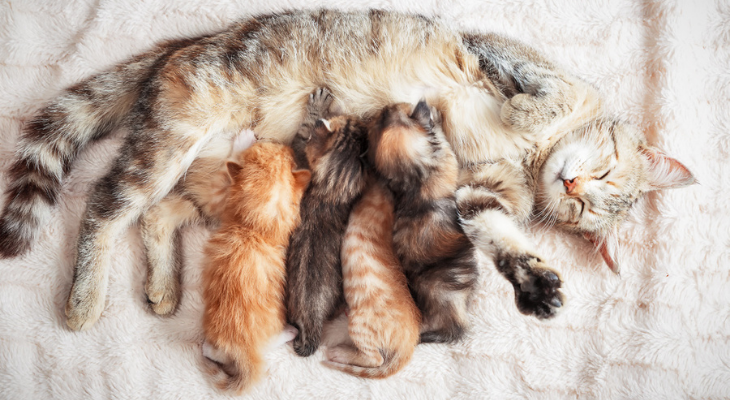
Kittens with nursing mother

Your Kitten's Developmental Milestones

Do you know what to expect if a kitten will soon be joining your family? Just like human babies, kittens pass through several distinct developmental stages.

Birth to 2 Weeks

Kittens can't see or hear when they're born but will develop those important senses fairly quickly. They'll identify their mother by scent and snuggle close to her and their littermates to keep warm. During the first two weeks, kittens spend much of their time asleep. Unable to handle even the most basic actions themselves, toothless newborns rely on their mothers for food. Mothers groom newborns by licking them, which also helps them go to the bathroom.

By the end of this period, kittens' eyes and ear canals open, making it possible to see and hear for the first time.

2 to 8 Weeks

Kittens can now see, although their distance vision will still be unclear for a while. They'll take their first steps and begin to explore their immediate surroundings. Their senses of smell and hearing will improve dramatically by the fourth week. For the first time, they'll begin to pay attention to the other kittens in the litter.

As they become steadier on their feet, and their vision improves, you'll see the kittens in a litter playing together. Teeth will begin to appear around three weeks of age. During this period, kittens learn how to use a litter box and groom themselves. Although they still rely on their mother for feedings, the little felines will gradually become much more independent.

Socialization takes place during this stage. Through socialization, kittens learn how to interact appropriately with other animals and people. Once kittens are a few weeks old, they can be gently handled for short periods. As they get a little older, play sessions with people should increase. DVM360 notes that it may be more difficult to socialize cats if they haven't had positive experiences with people and other animals before 7 weeks of age.

8 to 12 Weeks

Weaning starts at the beginning of this period. As feedings taper off, young cats can begin to eat kitten food. At this stage, kittens may be separated from their mothers to join new homes. Play becomes a favorite pastime. Kittens enjoy pouncing on invisible prey, zooming through the house, chasing their tails, and play fighting with their littermates or other cats.

3 to 6 Months

When kittens are around three months, baby teeth begin to fall out and are soon replaced with permanent teeth. Now is the time to catproof your home, if you haven't already done so, as teething kittens like to chew on all sorts of objects.

Kittens begin to fill out during this period and change from fluffy balls of fur to lean and muscular young cats. Although your kitten is still young, it will soon be able to reproduce. In fact, cats can become sexually mature as young as six months. Spaying and neutering, the surgeries that prevent reproduction, also reduce your pet's risk of developing certain types of cancers, including breast and testicular cancer.

Spaying or neutering can be performed as young as eight weeks, according to the ASPCA, but should be scheduled for no later than five months to prevent pregnancy.

6 to 18 months

Your kitten is now a teenager and will become fully grown during this stage. Adolescent cats have plenty of energy and enjoy playing with you and other cats and pets in your home. These enthusiastic play sessions can occur at all hours of the day or night.

When your kitten is a year old, it's time to make the switch to adult cat food. When your cat stops growing, it no longer needs the increased calories and nutrients that kitten food provides. If you continue to offer kitten food, your cat may soon develop a weight problem. Start the switch by mixing cat and kitten food together, gradually decreasing the amount of kitten food.

Do you have a new kitten? Plan to pay a visit to the veterinarian within the first several weeks after your new addition arrives. In addition to performing a checkup, your veterinarian will also offer several vaccines your kitten needs to stay healthy. Contact our office to arrange your feline friend's first visit to the veterinarian.

Sources:

DVM360: The Keys to Kitten Socialization, 2/25/17

PetMD: Kitten Development: Understanding a Kitten’s Major Growth Milestones, 3/19/18

Purina: Kitten Milestones and Development Stages by Week

Healthy Pets: Your Tiny Fluff Ball’s First 5 Weeks — 5 Big Milestones You Don’t Want to Miss, 1/24/17

  • Pet Health
    • Chronic Conditions
    • Digestive and Oral Health
    • Diseases and Viruses
    • Pests and Parasites
    • Orthopedics
  • Today's Veterinarian
  • Choosing Your Pet
    • Finding Your Pet
    • Cats
    • Dogs
    • Exotics
      • Amphibians
      • Birds
      • Reptiles
        • Lizards
        • Turtles
    • Small Mammals
      • Ferrets
      • Rabbits
      • Domesticated Animals
        • Prairie Dogs
      • Pocket Pets
        • Chinchillas
        • Guinea Pigs
        • Hamsters
        • Hedgehogs
        • Rats
    • Livestock
      • Cows
      • Donkeys, Horses & Mules
      • Goats
      • Pigs
      • Poultry
      • Sheep
  • Living With Your Pet
    • Bringing Your Pet Home
    • Children and Pets
    • Providing Care
    • Travel
    • Saying Goodbye
  • Newsletter Library
    • Cats
    • Tips for Pet Owners
    • Behavior & Training
    • Fleas & Parasites
    • Keeping Pets Healthy
    • Recognizing Illness
    • Nutrition & Food
    • Pet Dangers
    • Seasonal Topics
    • Visiting the Vet
    • Equine
    • Newsletter Archive
      • Fun with Pets
      • Unbelievable Pets
  • Video Newsroom
    • Health Topics
    • Technology and Science
    • Other Interests
  • Newsletter Library
  • Client Survey
  • Pets4Kids

Yes. Cats do get heartworms. Mention WEBDEAL 2. One offer per household. This is a limited time offer so call today for details and an appointment.

Error!

    Our Services

    • Services

      We strive to provide complete care for our patients. Learn more about all the services we provide.
    • Make An Appointment

      We will do our best to accommodate your busy schedule. Schedule an appointment today!
    • Online Forms

      Our patient forms are available online so they can be completed in the convenience of your own home or office.

    Office Hours

    Monday:

    9:30am

    6:00pm

    Tuesday:

    9:30am

    6:00pm

    Wednesday:

    9:30am

    6:00pm

    Thursday:

    Closed

    Friday:

    9:30am

    5:00pm

    Saturday:

    9:30am

    2:00pm

    Sunday:

    Closed

    Closed

    Location

    Find us on the map

    Testimonials

    Read What Our Clients Say

    • "Wow! Thanks to all the staff at Anderson Vet Clinic. I feel like you all truly love what you do! My kitty, Lola and I always have such a pleasant experience when we come in. Fortunately, it’s usually just for a check-up, but I would not leave Lola in anyone else’s hands but yours. Thank you for your caring commitment!"
      Maya Smith / Los Angeles, CA
    • "I have benefited tremendously from the care my pet received from Dr. Anderson."
      John Doe / San Diego, CA
    • "Fabio wasn’t eating the food I was giving him and I didn’t feel he was getting the nutrition he needed. Thanks to Dr. Anderson, he evaluated Fabio and his current diet to make some recommendations and now Fabio has gone from barely eating to finishing his meals and he looks healthier than ever. You clearly are an expert in your field...thanks so much!"
      Tara Brown / Kansas City, MO

    Featured Articles

    Read about interesting topics

    • March Newsletter: How to Keep Your Cat Safe When Outdoors

      Wondering how your cat can safely spend time outdoors? ...

      Read More
    • March Newsletter: How to Choose Safe Blankets for Pets

      Do you know how to pick a safe blanket for your pet? ...

      Read More
    • February Newsletter: How to Reduce Dental Anxiety in Pets

      Does your pet hate toothbrushing? These tips could reduce dental anxiety. ...

      Read More
    • February Newsletter: How to Safely Change Your Cat’s Food

      Buying a new food for your cat? Find out how to switch foods safely. ...

      Read More
    • January Newsletter: Signs Your Pet Needs a Wellness Exam

      Does your pet need a wellness exam? ...

      Read More
    • January Newsletter: How Your Veterinarian Can Help If Your Pet Ingests Something Toxic

      Has your pet eaten something it shouldn't have? Find out how your vet can help. ...

      Read More
    • December Newsletter: Signs Your Pet Needs a Professional Cleaning

      Do you know when your pet needs a professional cleaning? ...

      Read More
    • December Newsletter: Simple Ways to Keep Your Home Flea-Free for Your Pet’s Well-being

      Never want to see another flea again? Try these tips for a flea-free home. ...

      Read More
    • November Newsletter: The Importance of Bloodwork for Your Pet’s Health

      Wondering if your pet really needs bloodwork? Find out the benefits of blood tests for your furry friend. ...

      Read More
    • November Newsletter: Turkey Day Tips for Pet Owners

      Don't forget about your pet when making Turkey Day preparations. ...

      Read More

    Newsletter Sign Up

    Error!

      Connect With Us

      • Copyright © 2026 MH Sub I, LLC dba iMatrix.
      • Admin Log In
      • Site Map