Would you like to switch to the accessible version of this site?

Go to accessible site Close modal window

Don't need the accessible version of this site?

Hide the accessibility button Close modal window
Accessibility View Close toolbar
Normandy Animal Hospital

7626 Florissant Road

St. Louis, MO 63121 US

(314) 383-4677

Open mobile navigation
  • Home
  • New Patient Center
    • Online Forms
    • What to Expect
    • Veterinary Resources
    • Payment Options
  • About Us
    • Meet the Veterinarians
    • Dr. Jordan Rice DVM
    • Dr. Bryce M Goman
    • Meet Our Staff
      • Tricia Braucksick
      • Kayla Pullar
    • News
  • Services
    • Canine Vaccines
    • Feline Vaccines
    • Additional Services
  • Deals
  • Emergency
    • Allergic Reaction
    • Broken Bones
    • Burns
    • Choking
    • Drowning
    • Electric Shock
    • Frostbite and Cold Exposure
    • Heatstroke
    • Hit by Car
    • Lacerations, Cuts and Bleeding
    • Poisoning
    • Seizures
    • Ready in 3 Family Safety Guide
  • FAQ
  • Contact Us
  • Pet Memorials
  • Articles
  • Petsimonials
  • Spaying Your Pet
  • Heartworms and Prevention
  • Blog
  • Veterinary Topics
    • Pet Health
      • Chronic Conditions
      • Digestive and Oral Health
      • Diseases and Viruses
      • Pests and Parasites
      • Orthopedics
    • Today's Veterinarian
    • Choosing Your Pet
      • Finding Your Pet
      • Cats
      • Dogs
      • Exotics
        • Amphibians
        • Birds
        • Reptiles
          • Lizards
          • Turtles
      • Small Mammals
        • Ferrets
        • Rabbits
        • Domesticated Animals
          • Prairie Dogs
        • Pocket Pets
          • Chinchillas
          • Guinea Pigs
          • Hamsters
          • Hedgehogs
          • Rats
      • Livestock
        • Cows
        • Donkeys, Horses & Mules
        • Goats
        • Pigs
        • Poultry
        • Sheep
    • Living With Your Pet
      • Bringing Your Pet Home
      • Children and Pets
      • Providing Care
      • Travel
      • Saying Goodbye
    • Newsletter Library
      • Cats
      • Tips for Pet Owners
      • Behavior & Training
      • Fleas & Parasites
      • Keeping Pets Healthy
      • Recognizing Illness
      • Nutrition & Food
      • Pet Dangers
      • Seasonal Topics
      • Visiting the Vet
      • Equine
      • Newsletter Archive
        • Fun with Pets
        • Unbelievable Pets
    • Video Newsroom
      • Health Topics
      • Technology and Science
      • Other Interests
    • Newsletter Library
    • Client Survey
    • Pets4Kids
  • Home >
  • Articles >
  • Choosing Your Pet >
  • Exotics >
  • Reptiles

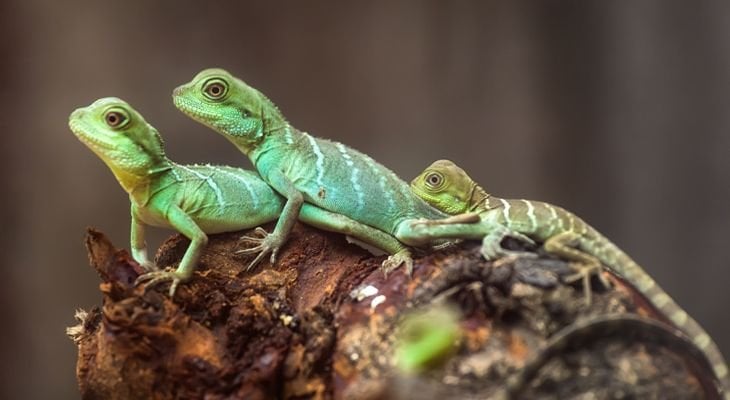
lizards on a log

People with limited living quarters may find that reptiles such as lizards or turtles fit perfectly into their lifestyles. Before deciding on a reptile, learn as much as possible about them and their needs. Poisonous snakes and certain reptiles should never be kept as pets. Ask your veterinarian about the suitability of a particular animal before you make your decision. There are many things to consider before committing to a reptile as a pet. 

Finding out if a Pet is Legal Where You Live
Many areas have enacted laws pertaining to keeping reptiles. Some are general and some are quite specific; in many places any reptiles that are considered dangerous (venomous snakes, alligators, etc.) are illegal but some places are even more restrictive (for example, in some states all constricting snakes including ball pythons are illegal).

Salmonella Risks and Prevention
All reptile owners need to be informed about Salmonella infections. While the risks shouldn't keep most people from keeping reptiles since with the proper management the risks are minimal. Still, owners should be aware of the risks, and the US Centers for Disease Control recommends that certain risk groups should be careful about contact with reptiles and amphibians.

The Importance of Light and Heat
Many problems with keeping reptiles can be traced back to not providing the proper environmental conditions, particularly heat. Proper lighting is also important for many reptiles. The equipment to provide the proper heat and light to captive reptiles is often quite expensive, but is absolutely essential to keeping pet reptiles healthy. It is important to find out exactly what conditions your reptile needs and never cut corners when it comes to meeting those conditions!

Why Choose Captive Bred Reptiles
There are numerous reasons why you should pick a captive bred reptile if at all possible, as explained here.

How to Pick a Healthy Reptile
It is important to keep in mind that depending on where you get a reptile, it may be very stressed, dehydrated, and prone to illness. Here are some items to look for when buying your reptile to increase the chances of picking out a healthy pet reptile.

While there are many types of reptiles that could be good pets, here we cover a few you could consider.

  • Pet Health
    • Chronic Conditions
    • Digestive and Oral Health
    • Diseases and Viruses
    • Pests and Parasites
    • Orthopedics
  • Today's Veterinarian
  • Choosing Your Pet
    • Finding Your Pet
    • Cats
    • Dogs
    • Exotics
      • Amphibians
      • Birds
      • Reptiles
        • Lizards
        • Turtles
    • Small Mammals
      • Ferrets
      • Rabbits
      • Domesticated Animals
        • Prairie Dogs
      • Pocket Pets
        • Chinchillas
        • Guinea Pigs
        • Hamsters
        • Hedgehogs
        • Rats
    • Livestock
      • Cows
      • Donkeys, Horses & Mules
      • Goats
      • Pigs
      • Poultry
      • Sheep
  • Living With Your Pet
    • Bringing Your Pet Home
    • Children and Pets
    • Providing Care
    • Travel
    • Saying Goodbye
  • Newsletter Library
    • Cats
    • Tips for Pet Owners
    • Behavior & Training
    • Fleas & Parasites
    • Keeping Pets Healthy
    • Recognizing Illness
    • Nutrition & Food
    • Pet Dangers
    • Seasonal Topics
    • Visiting the Vet
    • Equine
    • Newsletter Archive
      • Fun with Pets
      • Unbelievable Pets
  • Video Newsroom
    • Health Topics
    • Technology and Science
    • Other Interests
  • Newsletter Library
  • Client Survey
  • Pets4Kids

Yes. Cats do get heartworms. Mention WEBDEAL 2. One offer per household. This is a limited time offer so call today for details and an appointment.

Error!

    Our Services

    • Services

      We strive to provide complete care for our patients. Learn more about all the services we provide.
    • Make An Appointment

      We will do our best to accommodate your busy schedule. Schedule an appointment today!
    • Online Forms

      Our patient forms are available online so they can be completed in the convenience of your own home or office.

    Office Hours

    Monday:

    9:30am

    6:00pm

    Tuesday:

    9:30am

    6:00pm

    Wednesday:

    9:30am

    6:00pm

    Thursday:

    Closed

    Friday:

    9:30am

    5:00pm

    Saturday:

    9:30am

    2:00pm

    Sunday:

    Closed

    Closed

    Location

    Find us on the map

    Testimonials

    Read What Our Clients Say

    • "Wow! Thanks to all the staff at Anderson Vet Clinic. I feel like you all truly love what you do! My kitty, Lola and I always have such a pleasant experience when we come in. Fortunately, it’s usually just for a check-up, but I would not leave Lola in anyone else’s hands but yours. Thank you for your caring commitment!"
      Maya Smith / Los Angeles, CA
    • "I have benefited tremendously from the care my pet received from Dr. Anderson."
      John Doe / San Diego, CA
    • "Fabio wasn’t eating the food I was giving him and I didn’t feel he was getting the nutrition he needed. Thanks to Dr. Anderson, he evaluated Fabio and his current diet to make some recommendations and now Fabio has gone from barely eating to finishing his meals and he looks healthier than ever. You clearly are an expert in your field...thanks so much!"
      Tara Brown / Kansas City, MO

    Featured Articles

    Read about interesting topics

    • March Newsletter: How to Keep Your Cat Safe When Outdoors

      Wondering how your cat can safely spend time outdoors? ...

      Read More
    • March Newsletter: How to Choose Safe Blankets for Pets

      Do you know how to pick a safe blanket for your pet? ...

      Read More
    • February Newsletter: How to Reduce Dental Anxiety in Pets

      Does your pet hate toothbrushing? These tips could reduce dental anxiety. ...

      Read More
    • February Newsletter: How to Safely Change Your Cat’s Food

      Buying a new food for your cat? Find out how to switch foods safely. ...

      Read More
    • January Newsletter: Signs Your Pet Needs a Wellness Exam

      Does your pet need a wellness exam? ...

      Read More
    • January Newsletter: How Your Veterinarian Can Help If Your Pet Ingests Something Toxic

      Has your pet eaten something it shouldn't have? Find out how your vet can help. ...

      Read More
    • December Newsletter: Signs Your Pet Needs a Professional Cleaning

      Do you know when your pet needs a professional cleaning? ...

      Read More
    • December Newsletter: Simple Ways to Keep Your Home Flea-Free for Your Pet’s Well-being

      Never want to see another flea again? Try these tips for a flea-free home. ...

      Read More
    • November Newsletter: The Importance of Bloodwork for Your Pet’s Health

      Wondering if your pet really needs bloodwork? Find out the benefits of blood tests for your furry friend. ...

      Read More
    • November Newsletter: Turkey Day Tips for Pet Owners

      Don't forget about your pet when making Turkey Day preparations. ...

      Read More

    Newsletter Sign Up

    Error!

      Connect With Us

      • Copyright © 2026 MH Sub I, LLC dba iMatrix.
      • Admin Log In
      • Site Map